Essential Oils in Candles
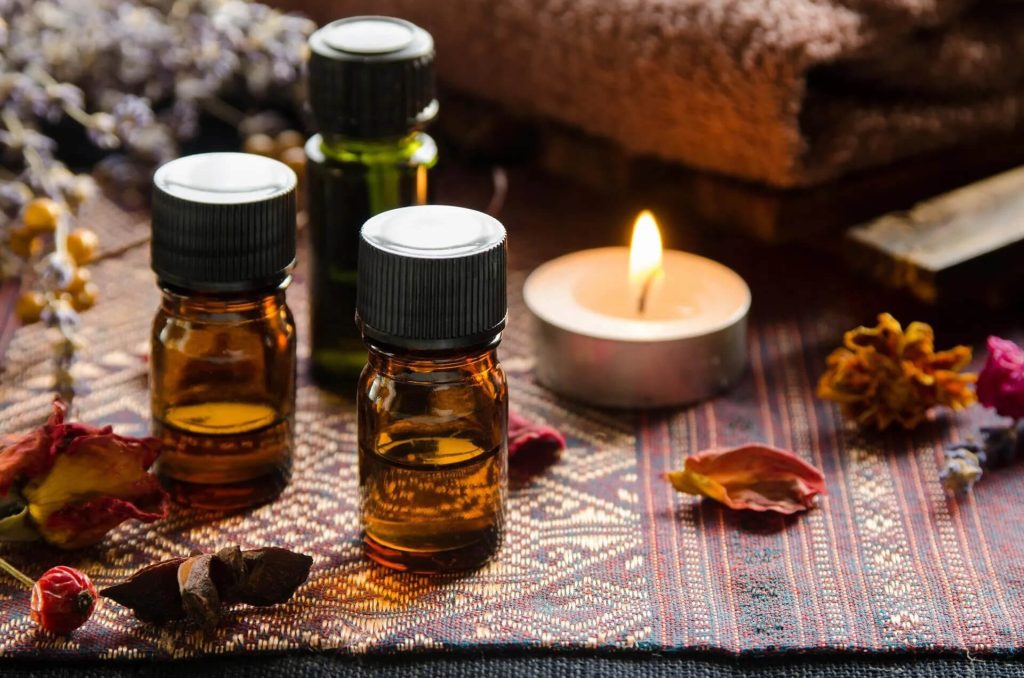
Essential oils are concentrated aromatic oils extracted from plants and are sometimes used to add natural fragrances to candles. They are obtained from sources such as flowers, leaves, fruits, peels, bark, roots, and other parts of plants.
Essential oils can provide distinctive natural aromas, but they do not always perform the same way as candle-specific fragrance oils. Their suitability depends on the type of essential oil, wax, concentration, wick, and candle-making process.
What Are Essential Oils?
Essential oils are highly concentrated aromatic substances derived from plants. Common examples used in fragrance applications include:
- Lavender
- Peppermint
- Lemon
- Eucalyptus
- Orange
- Rosemary
- Cedarwood
- Tea Tree
- Lemongrass
- Cinnamon
Each essential oil has its own aroma and characteristics.
Essential Oils vs. Fragrance Oils
| Feature | Essential Oils | Fragrance Oils |
|---|---|---|
| Primary source | Plant-derived | Natural, synthetic, or blended aromatic ingredients |
| Fragrance range | Mainly natural botanical aromas | Very wide range of fragrances |
| Scent character | Often natural and distinctive | Can be formulated for specific scent profiles |
| Candle performance | Varies by oil and formulation | Many are specifically designed for candle use |
| Cost | Can be relatively expensive | Varies widely |
| Heat performance | Varies considerably | Formulated products may offer more predictable performance |
How Essential Oils Are Used in Candles
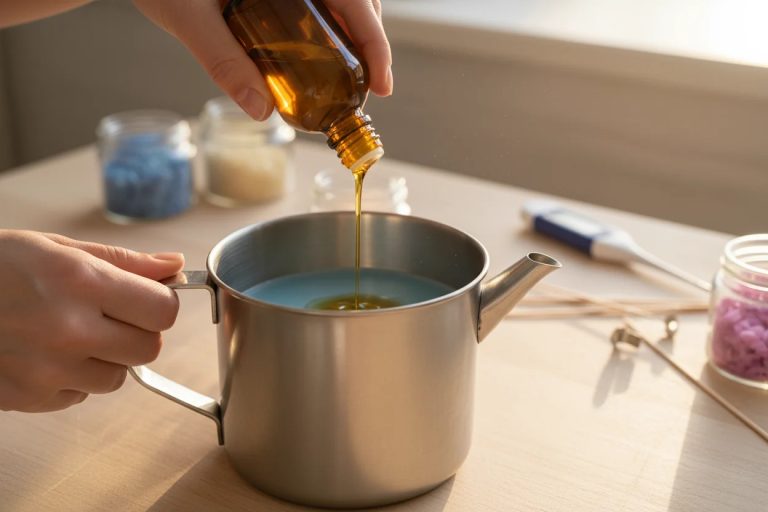
Essential oil is added to melted wax during candle production at a temperature recommended for the particular wax and oil. The oil should be measured accurately and mixed thoroughly to achieve an even distribution.
The appropriate amount should be determined from the wax manufacturer’s recommendations and the essential-oil supplier’s safety information. More oil does not automatically mean a stronger or better candle.
Factors Affecting Performance
Several factors influence how an essential oil performs in a candle:
- Type of wax
- Essential oil characteristics
- Fragrance concentration
- Mixing temperature
- Mixing time
- Candle curing time
- Wick size and type
- Container size
- Burning conditions
Some essential oils may have a relatively subtle scent when the candle is burning, while others may perform differently.
Cold Throw and Hot Throw
Cold Throw refers to the aroma noticeable when the candle is not burning.
Hot Throw refers to the fragrance released while the candle is burning.
An essential oil may smell strong in the finished, unlit candle but produce a different level of aroma when heated. Therefore, both should be evaluated during testing.
Benefits of Essential Oils
- Provide plant-derived aromas
- Offer a wide variety of botanical scents
- Can create distinctive fragrance combinations
- Useful for natural-inspired candle concepts
- Can be blended to create customized scent profiles
Important Considerations
Not every essential oil is automatically suitable for candle making. Some oils can be affected by heat, while others may have safety considerations when used in heated or burning products.
Before using an essential oil in a candle:
- Confirm that it is appropriate for the intended candle application.
- Follow the supplier’s recommended usage limits.
- Check relevant safety documentation.
- Test the complete candle formulation.
- Evaluate both fragrance performance and burning behaviour.
- Avoid making health or therapeutic claims about the candle simply because it contains an essential oil.
Essential Oil Candle Testing
Before producing candles in larger quantities, test the complete formulation. Observe:
- Flame behaviour
- Melt-pool development
- Soot and smoke
- Wick performance
- Container temperature
- Fragrance strength
- Overall burn performance
Testing helps determine whether the selected essential oil and wick work appropriately with the particular wax.
Popular Essential Oil Combinations
Candle makers can experiment with combinations such as:
- Lavender + Lemon – Fresh and floral
- Orange + Cedarwood – Citrus and woody
- Peppermint + Eucalyptus – Cool and fresh
- Lemongrass + Lavender – Fresh and herbal
- Rosemary + Lemon – Bright and herbal
The proportions should be developed through careful testing rather than assuming that a particular blend will perform well.
Conclusion
Essential oils can add distinctive plant-derived aromas to candles, but their performance can vary significantly from one oil to another. Proper selection, accurate measurement, suitable wax, appropriate wick selection, and thorough burn testing are important for creating a candle that performs consistently.
For candle makers, the key is to evaluate the complete candle formulation, rather than selecting an essential oil based on fragrance alone.