Essential Oils in Candles
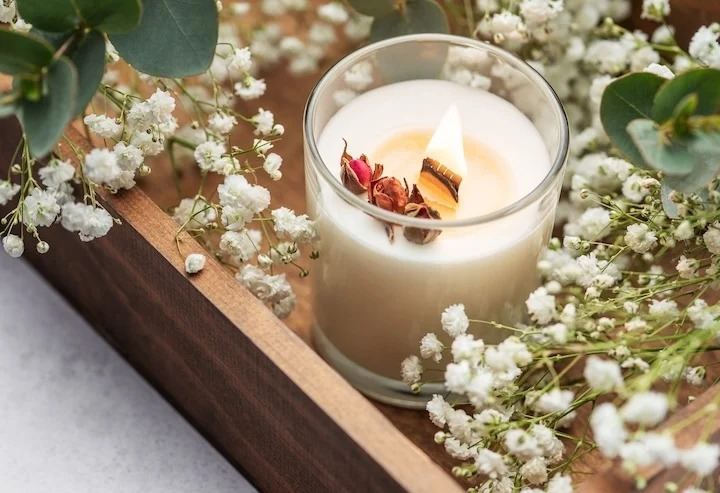
Essential oils are concentrated aromatic oils obtained from plants and are used by some candle makers to add natural, botanical fragrances to candles. They can be extracted from flowers, leaves, fruits, peels, bark, roots, and other plant materials.
When used in candles, essential oils can create distinctive scents. However, not every essential oil is suitable for candle making, so proper selection, usage levels, and testing are important.
What Are Essential Oils?
Essential oils are concentrated aromatic substances derived from plants. Common examples include:
- Lavender
- Lemon
- Orange
- Peppermint
- Eucalyptus
- Lemongrass
- Rosemary
- Cedarwood
- Tea Tree
- Cinnamon
Each essential oil has its own aroma and characteristics, and some may perform differently when exposed to the heat of a burning candle.
Essential Oils vs. Fragrance Oils
| Feature | Essential Oils | Fragrance Oils |
|---|---|---|
| Main source | Plant-derived | Natural, synthetic, or blended aromatic ingredients |
| Fragrance range | Mainly botanical scents | Very broad range of scent profiles |
| Aroma | Natural and distinctive | Can be specially formulated for specific scents |
| Candle performance | Varies by oil | Many are specifically formulated for candles |
| Heat performance | Varies | Depends on the formulation |
| Cost | Can be relatively high | Varies depending on formulation |
How Essential Oils Are Used in Candles
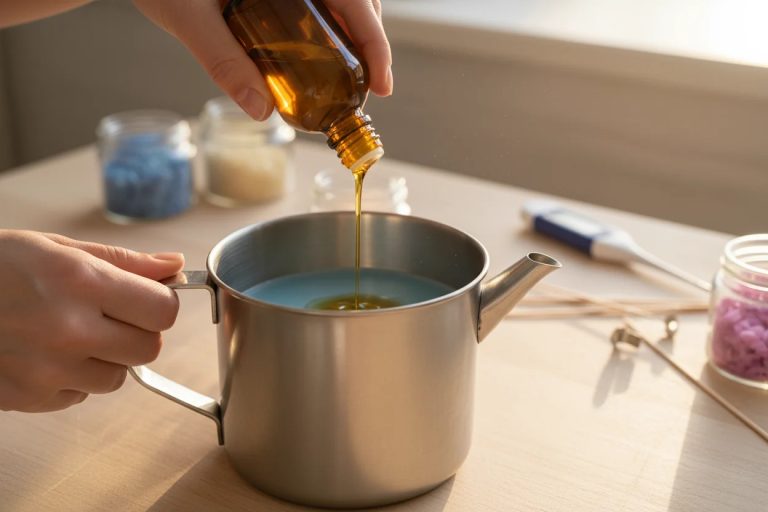
Essential oils are generally added to melted wax during the candle-making process. The oil should be measured accurately and mixed thoroughly so that it is distributed evenly throughout the wax.
The appropriate usage level depends on the wax, essential oil, supplier recommendations, and intended candle application. Adding excessive oil can negatively affect candle performance and does not necessarily produce a stronger fragrance.
Cold Throw and Hot Throw
Cold Throw:
The fragrance that can be noticed when the candle is not burning.
Hot Throw:
The fragrance released into the surrounding environment while the candle is burning.
An essential oil may have a noticeable cold scent but behave differently when exposed to the heat of the candle flame. Therefore, both should be evaluated during testing.
Factors That Affect Essential Oil Performance
Several factors can influence the final fragrance experience:
- Type of wax
- Essential oil characteristics
- Fragrance concentration
- Wax temperature when adding the oil
- Mixing time
- Curing time
- Wick type and size
- Container size
- Candle diameter
- Burning conditions
Popular Essential Oil Combinations
Candle makers can experiment with different combinations to create unique fragrance profiles:
Lavender + Lemon
A fresh and floral combination.
Orange + Cedarwood
A combination of citrus and woody notes.
Peppermint + Eucalyptus
A cool, fresh fragrance profile.
Lemongrass + Lavender
A fresh and herbal combination.
Rosemary + Lemon
A bright, clean, herbal aroma.
The proportions should be developed through testing with the specific wax and candle formulation.
Important Safety Considerations
Not every essential oil is suitable for use in candles. Before using an essential oil, check the supplier’s safety information, recommended usage levels, and suitability for candle applications.
It is also important to:
- Use oils from reliable suppliers.
- Follow recommended usage limits.
- Test the complete candle formulation.
- Check wick performance.
- Monitor flame behaviour and soot.
- Avoid assuming that a higher oil concentration is safer or better.
- Keep fragrance materials stored appropriately and away from excessive heat.
Testing Essential Oil Candles
Before producing candles in large quantities, conduct burn tests using the exact combination of wax, essential oil, wick, container, colour, and other additives.
During testing, observe:
- Flame size and stability
- Melt-pool development
- Soot and smoke
- Wick performance
- Container temperature
- Fragrance strength
- Overall burn behaviour
Benefits of Essential Oils in Candles
- Provide plant-derived fragrances
- Offer distinctive botanical aromas
- Allow creative fragrance combinations
- Suitable for natural-inspired candle products
- Provide a variety of floral, citrus, herbal, and woody scent options
Conclusion
Essential oils can add distinctive botanical fragrances to candles, but their performance can vary considerably from one oil to another. Choosing an appropriate oil, following recommended usage levels, selecting a suitable wick, and conducting proper burn testing are essential steps.
A successful essential-oil candle is created by evaluating the complete candle formulation, rather than relying on the fragrance of the oil alone.