Tealight Candles

1. Introduction
Tealight candles are small, compact candles made from wax and fitted with a short wick. They are usually poured into shallow aluminium cups that hold the wax and help contain it during burning.
They are widely used for decorative lighting, aromatherapy, festive occasions, candle warmers, and ambient lighting. Their compact size and simple construction make them suitable for both household use and large-scale manufacturing.
2. Definition of Tealight Candles
A tealight candle is a small candle designed to burn inside a cup or holder, typically made from aluminium. The wick draws liquid wax upward through capillary action. Heat from the flame melts more wax, which feeds the flame and sustains combustion.
A standard tealight consists of:
- Wax: The fuel that supports the flame.
- Wick: Draws melted wax toward the flame.
- Metal wick tab: Anchors the wick at the bottom of the cup.
- Container cup: Holds the wax and helps contain the molten wax.
- Optional additives: Fragrance oils and candle dyes used to modify scent and colour.
3. Types of Tealight Candles
3.1 Standard Tealight Candles
These are commonly made from paraffin wax or a suitable wax blend. They are generally unscented and used for everyday lighting, decorations, and candle holders.
3.2 Scented Tealight Candles
These contain fragrance oils designed to release a scent while burning. The fragrance concentration must be compatible with the wax and wick to avoid poor combustion, excessive soot, or an unstable flame.
3.3 Soy Wax Tealights
These are made from soy wax or a soy-based blend. They appeal to consumers who prefer plant-derived waxes. Their hardness, appearance, and burning performance depend on the particular formulation.
3.4 Beeswax Tealights
These use beeswax, which naturally ranges from pale yellow to golden in colour and may have a mild characteristic scent. Beeswax formulations may require different wick selection from paraffin or soy wax.
3.5 Coloured Tealight Candles
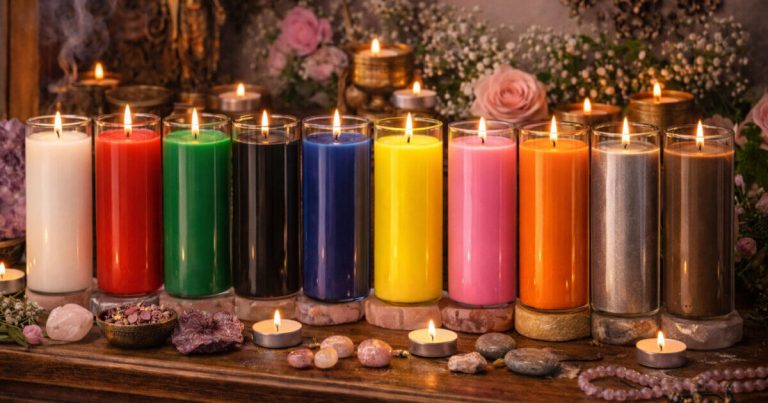
These use candle-compatible dyes to produce different colours for celebrations, events, and decorative applications. Dye selection and concentration should be tested to ensure they do not adversely affect burning performance.
3.6 Flameless LED Tealights
These are battery-operated electronic alternatives that imitate the appearance of a small candle. They do not use wax combustion or a traditional wick and are useful where an open flame is unsuitable.
4. Materials Used in Tealight Candle Manufacturing
| Material | Function |
|---|---|
| Paraffin wax | Common candle fuel with versatile processing properties |
| Soy wax | Plant-derived wax used alone or in blends |
| Beeswax | Natural wax with characteristic colour and aroma |
| Stearin or other wax modifiers | May adjust hardness and burning characteristics |
| Cotton wick | Draws liquid wax toward the flame |
| Aluminium cup | Holds the wax and supports the candle structure |
| Metal wick tab | Secures the wick at the cup base |
| Fragrance oil | Adds scent |
| Candle dye | Provides the required colour |
Material selection depends on the desired burn time, product cost, appearance, fragrance performance, and manufacturing method.
5. Manufacturing Process of Tealight Candles
Step 1: Wax Selection
The manufacturer chooses a wax or wax blend based on melting behaviour, hardness, shrinkage, cost, and desired burning characteristics.
Step 2: Wax Melting
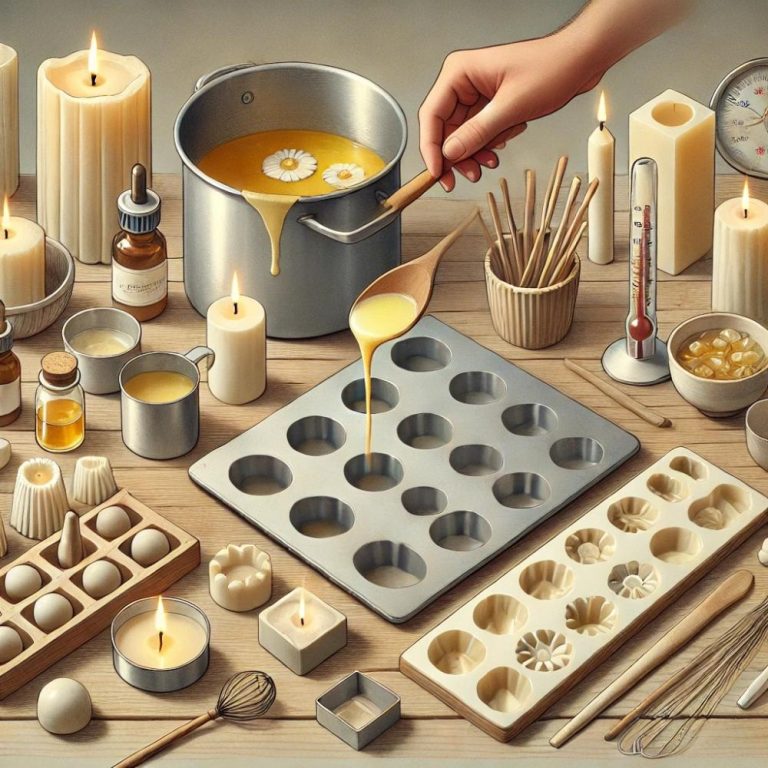
The wax is heated in a suitable melting tank. Temperature must be controlled according to the wax supplier’s recommendations. Fragrance oils and dyes, if used, are added at the specified stage and temperature.
Step 3: Wick Preparation
The wick is cut to the required length and attached to a metal wick tab. The wick assembly is positioned centrally in the cup.
Step 4: Cup Preparation
The aluminium cups are checked for damage, contamination, and dimensional consistency. The wick tab is secured at the bottom using a suitable fixing method.
Step 5: Wax Filling
Molten wax is dispensed into each cup. Fill weight, wax temperature, and dispensing accuracy must be controlled to ensure consistent product quality.
Step 6: Cooling and Solidification
The filled candles are allowed to cool under controlled conditions. Uneven cooling can cause sinkholes, surface defects, cracking, or shrinkage.
Step 7: Wick Trimming and Inspection
After the wax solidifies, the wick is trimmed to the specified length. Each production batch is checked for fill weight, wick position, surface quality, and cup condition.
Step 8: Burn Testing and Packaging
Representative samples are tested for ignition, flame stability, burn duration, wax consumption, and cup behaviour. Approved products are then packed into trays, bags, or cartons.
6. Design Considerations for Tealight Candles
6.1 Cup Diameter and Depth
The dimensions determine the candle’s capacity and influence the shape of the molten wax pool. Consistent cup dimensions help achieve repeatable burning performance.
6.2 Wick Position
The wick should be positioned near the centre of the cup. An off-centre wick can cause uneven burning and concentrated heating on one side.
6.3 Wax Formulation
The wax must melt and feed the wick appropriately. A formulation that is too hard or poorly matched to the wick may cause weak flames or incomplete wax consumption.
6.4 Cup Material
Aluminium is widely used because it is lightweight and can be formed into shallow cups. The cup must be dimensionally consistent and suitable for the expected temperatures during use.
6.5 Cooling Conditions
Cooling rate affects the candle’s surface appearance, shrinkage, and consistency. Production conditions should be adjusted for the selected wax blend.
6.6 Burn Duration
Burn time depends on wax mass, formulation, wick size, cup geometry, and environmental conditions. It should be established through controlled testing rather than assumed from candle size alone.
7. Common Manufacturing Defects and Solutions
| Defect | Possible cause | Recommended solution |
|---|---|---|
| Sinkholes | Wax shrinkage during cooling | Optimise filling and cooling conditions |
| Uneven wax surface | Inconsistent filling or cooling | Improve temperature control and filling accuracy |
| Off-centre wick | Incorrect placement or movement during filling | Improve wick-tab fixing and alignment |
| Weak flame | Wick too small or poor fuel delivery | Reassess wick and wax compatibility |
| Excessive flame or soot | Wick too large or unsuitable formulation | Optimise wick size and wax additives |
| Early extinguishing | Poor wick compatibility or unstable burning | Review wick design and perform burn tests |
| Excessive residual wax | Wick and wax combination is unsuitable | Adjust wick size or wax formulation |
| Cup overheating or deformation | Unsuitable cup material or candle design | Select appropriate materials and validate the finished candle |
8. Advantages of Tealight Candles
- Compact size: Easy to store, transport, and arrange.
- Economical production: Suitable for automated, high-volume manufacturing.
- Versatile applications: Used for decorations, ambient lighting, and fragrance.
- Simple packaging: Easily supplied in multi-candle packs.
- Material flexibility: Can be produced using different waxes, colours, and fragrances.
- Standardised dimensions: Consistent cup sizes support repeatable production.
9. Disadvantages of Tealight Candles
- Shorter burn duration than many larger candles.
- Limited wax capacity and fragrance output.
- Sensitive to wick selection and wax formulation.
- Metal cups can become hot during burning.
- Open flames require careful supervision.
- Poorly designed candles may produce soot, unstable flames, or excessive heat.
10. Applications of Tealight Candles
Tealight candles are commonly used for:
- Home decoration and ambient lighting.
- Restaurants, hotels, and event venues.
- Festive decorations and celebrations.
- Aromatherapy and fragrance applications.
- Suitable candle warmers.
- Religious and ceremonial settings.
- Decorative centrepieces and table arrangements.
Only use tealights in warmers and holders specifically designed for their dimensions and heat output.
11. Safety Precautions
- Place burning tealights on a stable, heat-resistant surface.
- Keep them away from curtains, paper, and other combustible materials.
- Never leave a burning candle unattended.
- Keep candles out of reach of children and pets.
- Do not move a candle while the wax is molten or the cup is hot.
- Avoid placing tealights directly on heat-sensitive furniture.
- Follow the manufacturer’s instructions for holders and warmers.
- For commercial production, test the complete candle design and follow applicable candle safety standards and labelling requirements.
Conclusion
Tealight candles are compact, cup-based candles valued for their simple construction, versatility, and economical production. Their manufacturing process involves wax preparation, wick assembly, cup filling, controlled cooling, quality inspection, and burn testing.
The most important factors affecting their quality are wax formulation, wick selection, cup dimensions, fill-weight consistency, and cooling conditions. Controlling these factors helps produce tealight candles with consistent appearance, reliable burning performance, and appropriate safety characteristics.