Types of Candle Dyes
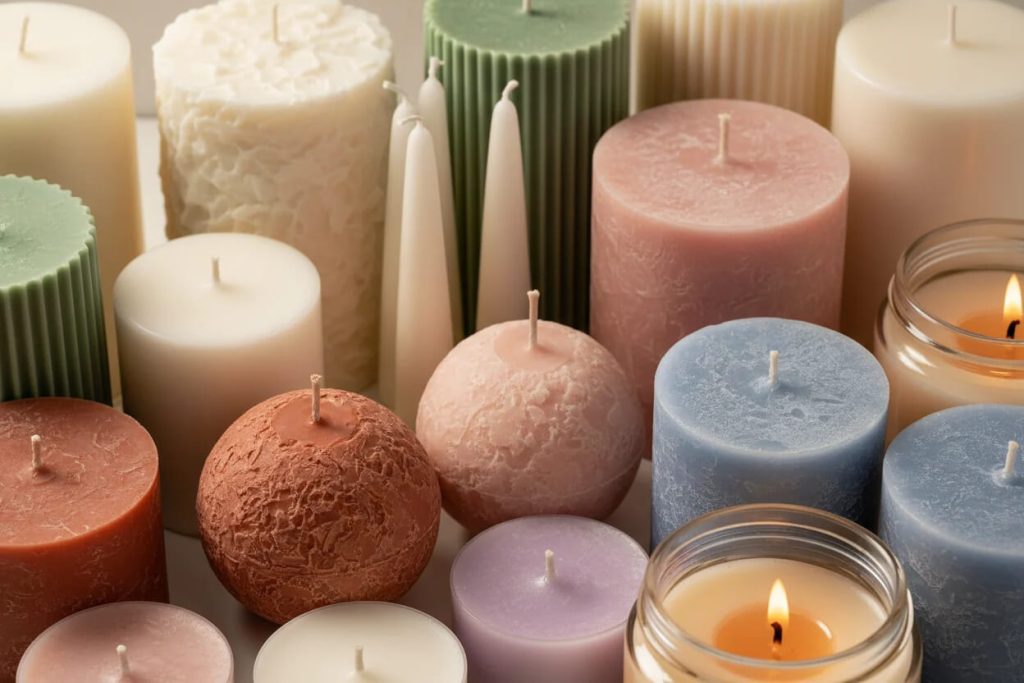
Candle dyes are specially formulated colorants used to give candles their desired colors. They are available in several forms, and each type has different advantages when working with wax.
Choosing the right dye depends on the type of wax, desired color intensity, candle design, and manufacturer’s recommended dosage.
1. Liquid Candle Dyes
Liquid dyes are concentrated colorants that can be added directly to melted wax.
Benefits:
- Easy to measure and mix
- Suitable for creating different shades
- Convenient for small adjustments
- Useful for consistent color production
They are commonly used for container, pillar, and decorative candles.
2. Dye Blocks
Dye blocks are solid, concentrated candle colorants. A measured portion is added to melted wax and allowed to dissolve completely.
Benefits:
- Easy to store and handle
- Highly concentrated
- Suitable for larger production batches
- Can produce strong, consistent colors when accurately measured
3. Dye Chips
Dye chips are small pieces of solid candle dye designed to be added to melted wax.
Benefits:
- Convenient to use
- Easy to portion
- Suitable for small and medium batches
- Available in many colors
For consistent results, weigh the chips rather than relying only on the number of pieces.
4. Powder Candle Dyes
Powder dyes are highly concentrated colorants supplied in powdered form.
Benefits:
- Strong coloring capability
- Useful for creating intense shades
- Small quantities can be sufficient
Powder dyes should be measured carefully and thoroughly incorporated into the wax according to the manufacturer’s instructions.
5. Candle Dye Flakes
Some candle dyes are supplied as small flakes. They are added to melted wax and mixed until completely dissolved.
Benefits:
- Convenient to handle
- Easy to measure by weight
- Suitable for producing repeatable colors
6. Dye Concentrates
Highly concentrated dye formulations are designed to produce strong colors using relatively small quantities.
They can be useful for commercial candle production where accurate and repeatable color matching is important.
Choosing the Right Candle Dye
Consider the following factors:
- Wax type – Soy, paraffin, beeswax, palm, coconut, and blends can respond differently to colorants.
- Desired color – Pastel, medium, or deep shades may require different concentrations.
- Dye concentration – Follow the supplier’s recommended dosage.
- Candle application – Container, pillar, votive, tealight, or decorative candles may have different requirements.
- Color consistency – Accurate weighing and repeatable processing are important for production batches.
Candle Dye vs. Other Colorants
Not every coloring material is suitable for candles. Candle-specific dyes should be preferred because they are formulated to work with wax.
Some pigments, mica powders, food colors, and water-based colorants may not dissolve properly in wax and can potentially interfere with the wick and burning performance.
Tips for Using Candle Dyes
- Measure the dye accurately.
- Add it to sufficiently melted wax.
- Stir thoroughly until the dye is evenly incorporated.
- Test a small batch before producing a large quantity.
- Allow the sample to cool completely before judging the final color.
- Record the wax and dye quantities for successful color formulas.
- Test the finished candle to ensure the dye does not negatively affect burning performance.
In Short
The main types of candle dyes include liquid dyes, dye blocks, dye chips, powder dyes, flakes, and concentrated dye formulations. Selecting a candle-specific dye and controlling its concentration carefully helps produce attractive, consistent, and well-performing colored candles.