Frosting in Candles
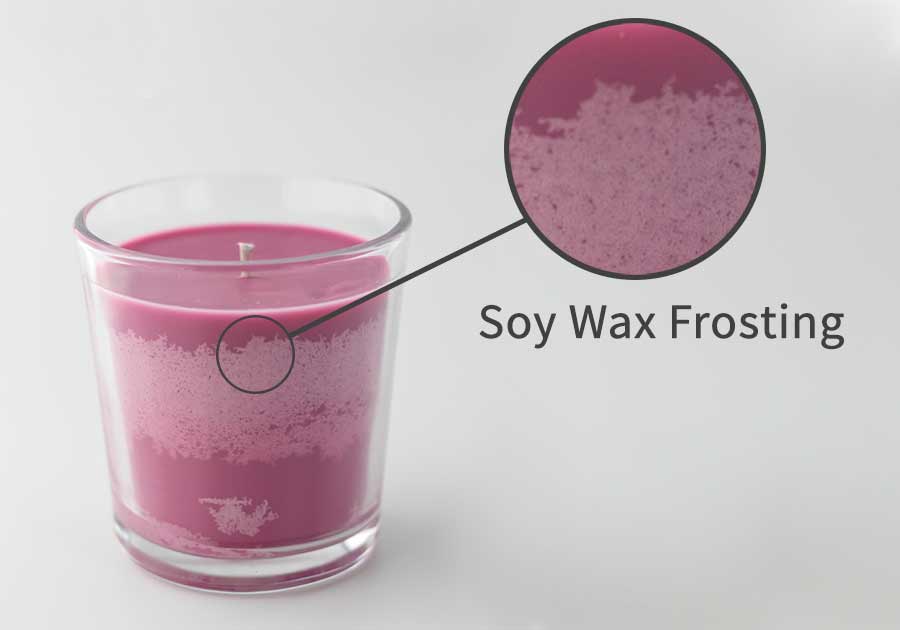
Frosting in candles is a natural, whitish or cloudy crystalline coating that can appear on the surface or sides of a candle, especially when using soy wax, coconut wax, or other vegetable-based waxes.
It happens when wax molecules naturally recrystallize as the candle cools. Frosting can look like white patches, a hazy film, or tiny crystal-like patterns on the candle. It does not usually indicate that the candle is defective, and it generally does not affect the candle’s burn performance, fragrance, or safety.
Common causes of frosting
- Temperature changes during cooling or storage
- Cooling the candle too quickly
- Natural characteristics of vegetable waxes
- Temperature fluctuations after the candle has set
- Certain fragrance oils, dyes, or additives
- The way the wax is poured and allowed to cool
Is frosting a problem?
No. Frosting is mainly a cosmetic issue. In handmade soy candles, it is often considered a normal characteristic of natural wax. In fact, the presence of frosting can sometimes indicate that the candle contains a high proportion of natural vegetable wax.
How to reduce frosting
Frosting can often be minimized by:
- Pouring wax at a consistent, suitable temperature
- Cooling candles slowly and evenly
- Avoiding drafts and sudden temperature changes
- Storing finished candles at a stable room temperature
- Testing different wax/fragrance combinations
Simple customer-friendly description:
Frosting is a natural characteristic of candles made with vegetable-based waxes, particularly soy wax. It appears as a soft white or crystalline coating on the wax as it naturally recrystallizes during cooling. While it may slightly change the candle’s appearance, frosting does not affect the candle’s quality, fragrance, or burning performance.