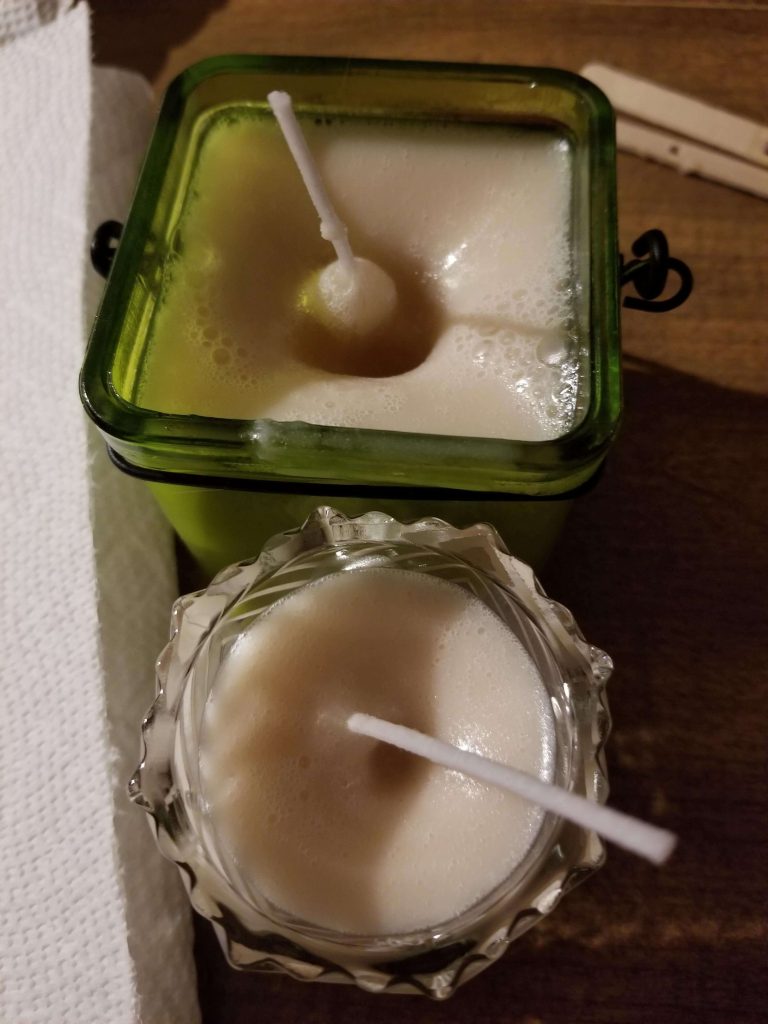
Candle Cracking and Prevention

1. Introduction
Candle cracking is a common defect in candle manufacturing in which visible cracks, splits, or fractures develop on the surface or inside the candle. These defects may appear during wax cooling, solidification, demoulding, storage, or transportation.
Cracking can affect the appearance, structural integrity, and overall quality of a candle. In severe cases, it may cause the candle to break into pieces or compromise its suitability for use.
Candle cracking is mainly associated with uneven cooling, wax shrinkage, internal stress, incorrect pouring temperatures, unsuitable wax formulations, and improper handling. Understanding these factors is essential for improving candle quality and reducing production losses.
The prevention of cracking requires proper control of the entire candle-making process, from selecting the wax and preparing the mould to cooling, demoulding, inspection, and storage.
2. Types of Candle Cracking
Candle cracking can occur in different forms depending on the cause, the type of wax, and the manufacturing conditions.
2.1 Surface Cracking
Surface cracking occurs when fine lines, small splits, or visible fractures develop on the outer surface of the candle.
It is commonly associated with rapid cooling, temperature fluctuations, wax shrinkage, and changes in the wax’s crystalline structure.
The outer surface may solidify before the inner portion has cooled completely. As the inner wax continues to contract, stresses develop and may cause the surface to crack.
Prevention methods:
- Allow the candle to cool gradually and uniformly.
- Avoid placing freshly poured candles near fans, open windows, or air-conditioning vents.
- Maintain a stable room temperature during cooling.
- Use a wax formulation suitable for the intended candle type.
- Avoid sudden temperature changes after solidification.
2.2 Internal Cracking
Internal cracking occurs when fractures develop inside the candle body. These cracks may not be visible from the outside and may only become apparent when the candle is cut, handled, or used.
Internal cracks generally develop when different regions of the candle cool and contract at different rates. Thick candles are particularly susceptible because their centres retain heat longer than their outer surfaces.
Internal cracking may also be associated with trapped air, uneven solidification, or excessive internal stress.
Prevention methods:
- Use controlled cooling conditions.
- Avoid excessive temperature differences between the mould and molten wax.
- Ensure consistent pouring conditions.
- Review the wax formulation and candle dimensions.
- Inspect samples when investigating recurring internal defects.
2.3 Top Cracking
Top cracking refers to cracks that appear on the upper surface of a candle, often around the wick or a central depression.
During cooling, wax contracts and may form a depression or cavity near the centre. If the surface solidifies unevenly, cracks may develop around this area.
This defect is more noticeable in moulded pillar candles and container candles with an uneven top surface.
Prevention methods:
- Follow the wax manufacturer’s recommended pouring temperature.
- Maintain consistent cooling conditions.
- Use an appropriate pouring and top-up procedure when recommended for the wax.
- Avoid disturbing the candle while it is solidifying.
- Check that the wick remains properly positioned during cooling.
2.4 Cracking During Demoulding
Cracking during demoulding occurs when a candle develops fractures or breaks while being removed from its mould.
This may happen when the candle has not cooled sufficiently, the wax is brittle, the mould has excessive adhesion, or too much force is applied during removal.
Complex mould designs, narrow sections, sharp corners, and intricate decorative features can increase the risk of damage.
Prevention methods:
- Allow sufficient cooling and solidification time.
- Use a mould material suitable for the candle design.
- Ensure the mould is clean and in good condition.
- Incorporate appropriate draft angles where practical.
- Remove the candle gently without excessive pulling, twisting, or bending.
2.5 Cracking During Storage and Transportation
Cracks may also develop after the candle has been manufactured successfully. This can occur when candles are exposed to repeated temperature fluctuations, mechanical impacts, excessive pressure, or unsuitable storage conditions.
Candles with thin sections or complex shapes may be especially vulnerable to mechanical damage.
Prevention methods:
- Store candles in a stable-temperature environment.
- Avoid direct sunlight and excessive heat.
- Protect candles from cold drafts and sudden temperature changes.
- Use suitable packaging to prevent impact and compression.
- Handle and transport candles carefully.
3. Major Causes of Candle Cracking
3.1 Uneven Cooling
Uneven cooling is one of the principal causes of cracking in moulded candles.
When molten wax is poured into a mould, the wax near the mould walls generally begins to cool before the wax at the centre. If the temperature difference becomes excessive, the outer and inner regions contract at different rates.
The outer layer may become rigid while the inner wax continues to cool and shrink. This can create tensile stresses that exceed the strength of the solidified wax, resulting in cracks.
The risk depends on the candle’s size, shape, wax composition, mould material, and surrounding temperature.
Preventive measures:
- Allow the candle to cool at a controlled rate.
- Maintain consistent ambient conditions.
- Avoid forced cooling unless the process has been properly validated.
- Use suitable mould temperatures.
- Pay particular attention to large-diameter and thick candles.
3.2 Incorrect Wax Pouring Temperature
The pouring temperature influences wax flow, mould filling, crystallization, and the subsequent cooling process.
If wax is poured at an excessively high temperature, it may take longer to cool and can develop significant temperature gradients within the candle.
If the wax is poured at too low a temperature, it may begin solidifying before the mould is completely filled. This can cause poor surface finish, incomplete filling, or weakly bonded regions when multiple pours are involved.
However, pouring temperature alone does not determine whether cracking will occur. Wax composition and cooling conditions also play important roles.
Preventive measures:
- Follow the wax manufacturer’s recommended temperature range.
- Use a calibrated thermometer.
- Maintain a consistent heating and pouring procedure.
- Avoid unnecessary overheating.
- Conduct controlled trials when changing wax types or formulations.
3.3 Wax Shrinkage
Wax contracts as it cools and solidifies. This natural process is known as shrinkage.
If the candle is prevented from contracting freely, or if different regions shrink at different rates, internal stresses may develop. These stresses can lead to cracks, surface splits, internal cavities, or separation from the mould wall.
Shrinkage behaviour varies between paraffin, soy, beeswax, coconut wax, and blended formulations.
Preventive measures:
- Select wax designed for the intended candle application.
- Follow the recommended cooling procedure.
- Consider shrinkage when designing the mould.
- For suitable moulded candles, use a controlled second pour if recommended by the wax supplier.
- Avoid abrupt temperature changes during and after cooling.
3.4 Incorrect Wax Formulation
The composition of the wax strongly influences its hardness, flexibility, crystallization behaviour, and resistance to cracking.
A formulation that becomes too hard or brittle at the storage temperature may be more likely to crack during demoulding or handling.
Fragrance oils, dyes, stearic acid, and other additives can alter the physical characteristics of the wax. Excessive or incompatible additives may contribute to structural defects.
Preventive measures:
- Use wax specifically formulated for the candle type.
- Measure all ingredients accurately.
- Follow the manufacturer’s recommended fragrance and additive limits.
- Verify compatibility before combining different waxes or additives.
- Test the finished formulation under actual production and storage conditions.
3.5 Incorrect Mould Temperature
Mould temperature influences how heat is transferred away from the molten wax.
A mould that is too cold may cause the wax near its walls to solidify rapidly, creating a large temperature difference between the outer and inner regions.
A mould that is too warm may prolong cooling and affect surface finish or production cycle time.
Preventive measures:
- Establish a suitable mould temperature for the wax formulation.
- Preheat the mould when recommended.
- Keep mould temperatures consistent between production batches.
- Ensure the mould is dry and free from contaminants.
- Avoid sudden changes in mould temperature.
3.6 Premature Demoulding
Removing a candle too early can damage its structure because the wax may not yet have developed sufficient strength.
Even if the candle appears solid on the outside, the centre may still be warm and relatively soft. Applying force at this stage can create cracks or deformation.
Preventive measures:
- Establish a suitable minimum cooling time.
- Consider candle size and wax type when determining demoulding time.
- Check that the candle is sufficiently firm before removal.
- Use suitable mould-release techniques.
- Avoid relying solely on surface appearance to determine whether the candle is ready.
3.7 Improper Storage Conditions
Candles may experience changes in their wax structure when stored under fluctuating temperatures.
Repeated heating and cooling can contribute to dimensional changes, brittleness, or cracking, depending on the wax formulation. Mechanical loads during transport may further damage vulnerable areas.
Preventive measures:
- Store candles at a stable, moderate temperature.
- Keep them away from direct sunlight and heat sources.
- Avoid freezing or sudden cooling.
- Use protective packaging.
- Follow any specific storage recommendations provided by the wax supplier.
4. Candle Cracking and Preventive Measures
| Cause | Typical effect | Preventive action |
|---|---|---|
| Uneven cooling | Surface and internal cracks | Maintain controlled, uniform cooling |
| Incorrect pouring temperature | Uneven solidification and surface defects | Use the recommended pouring range |
| Wax shrinkage | Internal stress and splitting | Optimize wax formulation and cooling |
| Unsuitable wax blend | Brittle candle structure | Select application-specific wax |
| Incorrect mould temperature | Rapid or uneven solidification | Control mould temperature |
| Premature demoulding | Cracking or breakage | Allow sufficient setting time |
| Poor mould design | Sticking or stress concentration | Improve mould finish and geometry |
| Excessive fragrance or additives | Changes in wax structure | Control ingredient percentages |
| Temperature fluctuations | Delayed cracking or brittleness | Maintain stable storage conditions |
| Rough handling | Mechanical fractures | Use careful handling and protective packaging |
5. Recommended Procedure for Preventing Candle Cracking
A consistent manufacturing procedure helps minimize defects and improve repeatability.
Step 1: Select the Appropriate Wax
Choose a wax that matches the candle’s intended shape, size, appearance, and application.
Pillar candles, container candles, and decorative moulded candles may require different formulations because their cooling and structural requirements differ.
Step 2: Control Wax Heating
Heat the wax according to the supplier’s recommendations. Avoid unnecessary overheating, which can affect the formulation and complicate process control.
Measure the temperature accurately before pouring.
Step 3: Prepare the Mould
Ensure that the mould is clean, dry, properly assembled, and free from damage.
Check that the mould temperature is suitable for the selected wax and that the mould design permits easy removal of the finished candle.
Step 4: Maintain Accurate Formulation
Measure fragrance oils, dyes, and additives according to the established formulation.
When changing an ingredient or supplier, produce a small test batch and evaluate the results before introducing the new formulation into regular production.
Step 5: Pour the Wax Consistently
Use a controlled pouring procedure and the recommended temperature range.
Pour carefully to ensure complete filling and minimize air entrapment. For moulded candles that require a second pour to compensate for shrinkage, follow the validated procedure for that wax.
Step 6: Allow Controlled Cooling
Place the moulds in a stable environment and allow the candles to cool gradually.
Avoid direct airflow, cold surfaces, or abrupt changes in ambient temperature. Larger candles may require longer cooling times than smaller candles.
Step 7: Demould Carefully
Remove the candle only after sufficient solidification.
Apply even, gentle force and avoid twisting or pulling thin sections. If the candle sticks repeatedly, inspect the mould condition, surface finish, and demoulding procedure.
Step 8: Inspect and Store
Inspect the finished candle for surface cracks, top cracks, internal defects where applicable, and damage caused during demoulding.
Store acceptable candles in a suitable environment and protect them from mechanical impacts and temperature fluctuations.
6. Troubleshooting Candle Cracking
When cracking occurs, the location and timing of the defect can help identify its likely cause.
| Defect observed | Possible cause | Recommended investigation |
|---|---|---|
| Vertical cracks on the sides | Uneven cooling or shrinkage stress | Review cooling rate and mould temperature |
| Cracks around the wick | Localized shrinkage or uneven cooling | Inspect the wick area and pouring procedure |
| Cracks immediately after demoulding | Insufficient solidification or mould adhesion | Review cooling time and mould condition |
| Cracks appearing after several days | Storage fluctuations or formulation issues | Review storage temperature and wax composition |
| Cracks in thick candle sections | Internal temperature gradients | Review candle dimensions and cooling conditions |
| Cracks near sharp corners | Stress concentration or difficult demoulding | Review mould geometry and removal technique |
| Repeated cracks across all batches | Unstable process or unsuitable formulation | Review the complete manufacturing process |
These observations are diagnostic indicators rather than definitive conclusions. Several factors may contribute to a single defect.
7. Quality Control in Candle Manufacturing
Quality control is essential for identifying the causes of cracking and preventing recurrence.
The following process parameters should be monitored and recorded:
- Wax type, grade, and batch number
- Wax heating temperature
- Pouring temperature
- Mould temperature
- Room temperature and cooling conditions
- Fragrance and additive concentrations
- Cooling time before demoulding
- Crack frequency, location, and severity
- Storage and transportation conditions
When investigating a defect, it is helpful to change one process variable at a time while keeping the other conditions consistent. This makes it easier to determine which factor is responsible for the improvement or deterioration.
For production environments, a simple defect log can be used to record the number of cracked candles per batch and calculate the defect rate:
Defect Rate (%)=Total Candles ProducedNumber of Cracked Candles×100
Tracking this percentage over time helps determine whether corrective actions are effective.
8. Importance of Wax Type
Different waxes behave differently during cooling and solidification, so prevention methods must be adjusted accordingly.
Paraffin wax: Shrinkage, cooling gradients, and the selected formulation can influence cracking. Suitable mould conditions and controlled cooling are important.
Soy wax: Its crystallization behaviour can contribute to visible surface changes and structural stresses. Formulation-specific pouring and cooling procedures are recommended.
Beeswax: Its hardness and shrinkage behaviour depend on composition and temperature. Controlled cooling and careful demoulding help prevent damage.
Coconut wax and blended waxes: Their behaviour depends strongly on the blend and intended application. The manufacturer’s processing recommendations should be followed.
No single temperature, cooling time, or formulation is suitable for every wax. Process conditions should be established through supplier guidance and practical testing.
9. Conclusion
Candle cracking is a manufacturing defect that can develop because of uneven cooling, wax shrinkage, unsuitable formulations, incorrect processing temperatures, premature demoulding, or improper storage.
The most effective way to prevent cracking is to control the complete candle production process. This includes selecting the correct wax, maintaining suitable heating and pouring temperatures, preparing the mould properly, allowing gradual cooling, demoulding carefully, and storing the finished candles under stable conditions.
The key to crack-free candle production is consistent process control combined with a wax formulation and mould design suited to the candle’s size and shape. Regular inspection, accurate production records, and systematic troubleshooting help reduce defects, improve product appearance, and maintain consistent manufacturing quality.